Average Reviews:

(More customer reviews)The essays of the book are so informative and useful for any scholar. I really enjoy reading this book but due to the poor and fancy typography, it makes me feel hard even reading a short paragraph. There are more than 450 color images in this book but unfortunately most of them; especially Courbet's paintings are out off focus. There are many full-page color images, one could hardly find the details of the artwork because they are blurred and dull. I would like to give 6 stars to the great texts but 2 stars for the poor quality of the printing. This book could be actually one of the best monographs on individual artist, But I think, the Met Museum owed too much to Courbet and all the contributors.
Click Here to see more reviews about: Gustave Courbet
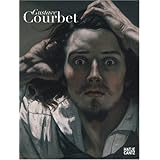
Nowadays it is difficult to conceive of the impact that Gustave Courbet's paintings made on French art of the mid-nineteenth century. At once casting himself as revolutionary, bohemian and peasant, Courbet (1819-1877) overturned a deeply-entrenched tradition of academic painting in France, and, eschewing the Romanticism of Delacroix and the NeoClassicism of Ingres, coined instead an idiom he named "Realism." Realism was not pretty, classically proportioned or literary; rather, it confronted the conditions of rural working life, then an unimaginable subject for art. The first masterpiece of this new style was "Burial at Ornans" (1849-1850), a colossal anti-epic that depicted an ordinary funeral in Courbet's home town. The contrast between the work's scale and its subject matter was pronounced, and its murky earth tones struck critics as willfully ugly--a defining reaction that would recur throughout the Modern period, particularly in the reception of early works by Manet and Picasso. Courbet's palette emphasized mass and body politically--that is, in a manner that affirmed the world itself rather than the transcendence of it. His equally famous "The Origin of the World" of 1866, which presented the female genitalia close-up, made this stance explicit. The conceptual beginnings of the "painting of Modern life" are as much in Courbet's Realism as in Charles Baudelaire's famous essay of the same name.In this new assessment, published on the occasion of a major 2008 traveling exhibition, renowned experts shed light on the development of Courbet's realistic, critical style and trace his influence on his contemporaries and subsequent generations, as well as his relationship to early photography. At 480 pages, this monumental volume provides a long-overdue reckoning of this great artist's work.
 Get 37% OFF

No comments:
Post a Comment